Pest control marketing guide
Pest Control Marketing Cost UK: 2026 Price Guide
Pest Control Marketing Cost UK: 2026 Price Guide
Pest control marketing cost UK typically ranges between £600 and £1,500 monthly for single-van operators, while multi-van regional firms invest £2,000 to £4,500. Average cost per lead sits between £14 and £24 for summer wasps, rising to £30 to £55 for complex rodent proofing and commercial hygiene contracts.
Key Takeaways
- Monthly Outlay: Independent UK pest controllers allocate £600 to £1,500 monthly across local search and pay-per-click advertising.
- Lead Benchmarks: Wasp nest enquiries cost £14 to £22 each; rodent and bed bug enquiries range from £28 to £55.
- Waste Control: Rigorous negative keyword exclusions prevent 30% of budget disappearing into council and DIY queries.
- Proof Point: Supreme Pest Control in Dublin generated 349.13 verified conversions at €17.84 average cost per conversion over six months.
- Channel Pacing: Paid search captures urgent same-day jobs while Google Maps and organic rankings reduce customer acquisition costs over time.
Contents
- Search Marketing Budget Tiers
- Cost Per Lead Benchmarks by Pest Category
- UK Trade Accreditation & Regulatory Standards
- Audited Campaign Proof: Supreme Pest Control
- Seasonality & Budget Allocation Through the Year
- Common Mistakes That Inflate Marketing Expenses
- What to Do First: A 6-Step Implementation Checklist
- Frequently Asked Questions
- Sources & Verification
Introduction
Investing in customer acquisition is critical for UK pest control companies seeking consistent van schedules. Whether running a solo emergency response vehicle or managing a regional fleet, knowing exactly how much to spend on search marketing prevents wasted capital. This guide provides realistic financial benchmarks, channel breakdowns, and verified campaign data to help you budget with confidence.
Search Marketing Budget Tiers
Monthly advertising investments must align with van capacity, response territory, and gross margin per treatment. Allocating excessive spend to a single vehicle creates scheduling bottlenecks, while underfunding a multi-van fleet leaves technicians sitting idle.
| Business Model | Fleet Size | Monthly Ad Spend | Search Optimisation Fee | Target Monthly Leads |
|---|---|---|---|---|
| Solo Operator | 1 van | £600 – £1,000 | £400 – £750 | 30 – 55 leads |
| Regional Service | 2 – 4 vans | £1,500 – £3,000 | £800 – £1,500 | 75 – 150 leads |
| Commercial Specialist | 5+ vans | £3,500 – £7,000 | £1,500 – £2,500 | 180 – 350+ leads |
Ad spend figures represent direct media payments to Google Ads, while management fees cover negative keyword pruning, landing page optimisation, and call tracking infrastructure.
Cost Per Lead Benchmarks by Pest Category
Lead acquisition costs vary dramatically depending on biological urgency, customer panic, and treatment complexity. High-urgency summer calls convert swiftly at modest costs, whereas commercial rodent proofing involves longer quotation cycles.
- Wasp Nest Removal: £14 to £22 per qualified call. Homeowners require immediate relief and make fast buying decisions.
- Rodent Eradication (Mice & Rats): £28 to £45 per enquiry. Involves multi-visit baiting, camera inspections, and exclusion proofing.
- Bed Bug Heat Treatments: £35 to £65 per lead. High quotation values (£400 to £1,000+) justify higher acquisition investment.
- Flea & Carpet Moth Treatments: £20 to £32 per lead. Moderate urgency with steady seasonal demand during warmer months.
- Commercial Facility Contracts: £60 to £140 per audit enquiry. Lucrative recurring annual contracts with quarterly maintenance fees.
To calculate your exact acquisition metrics based on your average invoice values, explore our interactive Cost Per Lead Calculator.
UK Trade Accreditation & Regulatory Standards
Building trust on local landing pages is essential for converting search clicks into booked callouts across the United Kingdom. Displaying recognised trade bodies elevates conversion rates and reduces effective lead costs.
The British Pest Control Association (BPCA) and the National Pest Technicians Association (NPTA) represent the gold standard for UK professional exterminators. Verified membership proves adherence to British Standard EN 16636, public liability coverage, and qualified technician status. Highlighting these badges beside your phone number reassures customers that your business operates safely and legitimately.
Furthermore, compliance with the Campaign for Responsible Rodenticide Use (CRRU) demonstrates environmental stewardship and adherence to UK stewardship regimes for rodenticides.
Audited Campaign Proof: Supreme Pest Control
Real campaign metrics demonstrate what disciplined search management achieves in active metropolitan markets.
In our audited management of Supreme Pest Control (Dublin searches) between 1 April and 4 October 2026, the account recorded:
- Total Impressions: 55,475
- Total Ad Spend: €6,230.12
- Tracked Conversions: 349.13
- Average Cost per Conversion: €17.84
- Average Cost per Click (CPC): €2.10
During peak summer demand in September 2026 alone, the account deployed €1,215.80 in spend, generating 64.13 conversions at an average CPC of €3.97.
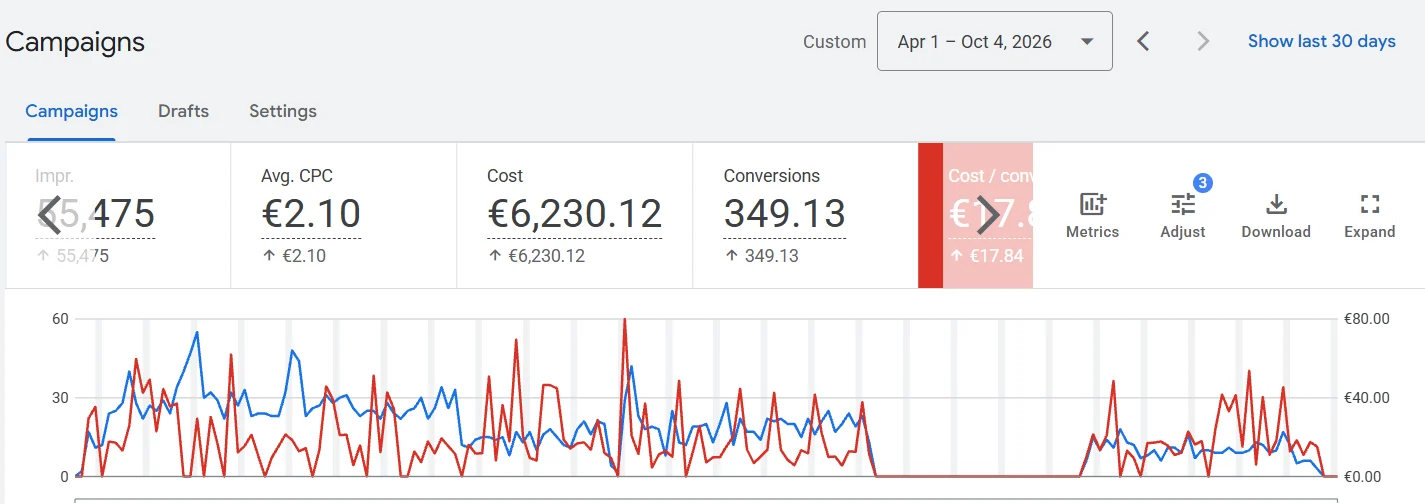 Audited Google Ads dashboard for Supreme Pest Control showing 349.13 conversions at €17.84 cost per conversion between April and October 2026.
Alongside paid ads, Search Console records over three months showed substantial organic search visibility for high-intent terms:
- pest control dublin: 18 clicks / 3,547 impressions
- wasp nest removal dublin: 10 clicks / 1,606 impressions
- wasp nest removal: 8 clicks / 1,097 impressions
- pest control: 4 clicks / 2,476 impressions
- pest control near me: 1 click / 1,587 impressions
Read the full data analysis in our Supreme Pest Control Case Study.
Seasonality & Budget Allocation Through the Year
Pest control demand follows biological cycles that require proactive budget pacing rather than rigid year-round spending.
- Spring (March – May): Ants, birds, and initial commercial kitchen audits emerge. Maintain steady search presence.
- Summer (June – September): Peak wasp season drives explosive residential volume. Shift up to 45% of annual ad budget into emergency search ads.
- Autumn (October – November): Falling temperatures drive rodents indoors into lofts and basements. Pivot ad messaging to rat proofing.
- Winter (December – February): Steady commercial pest maintenance and residential mouse infestations. Focus on annual contract acquisition.
Review our dedicated Seasonal Pest Control Marketing Calendar for tactical month-by-month planning.
Common Mistakes That Inflate Marketing Expenses
Uncontrolled search campaigns frequently bleed profit through avoidable structural missteps. Eliminating these errors immediately lowers customer acquisition costs.
- Broad Match Keyword Overuse: Bidding on unmodified search terms matches irrelevant queries such as council grants or pest identification photos.
- Neglecting Council Exclusion Negatives: Failing to exclude words like "council", "environmental health", and "free" wastes 30% of daily budgets.
- Slow Mobile Web Pages: Over 80% of emergency pest enquiries occur on mobile devices. Pages taking more than three seconds to load lose anxious callers.
- Missing Dynamic Call Tracking: Without tracking phone calls back to specific search keywords, operators cannot determine which terms generate profitable jobs.
- Lack of Dedicated Service Pages: Sending wasp searchers to a generic home page forces users to search for pricing, crushing conversion rates.
To understand how attribution prevents ad waste, study our guide on Call Tracking for Pest Control.
What to Do First: A 6-Step Implementation Checklist
- Audit Negative Keywords: Add comprehensive negative lists excluding council, job seeker, and DIY terms before launching ads.
- Setup Mobile Call Tracking: Implement dynamic phone tracking numbers to attribute every inbound caller to their search query.
- Optimise Google Business Profile: Ensure your primary category is "Pest Control Service" and verify opening hours and emergency service areas.
- Deploy Single-Pest Landing Pages: Build distinct landing pages for wasp removal, rodent control, and commercial prevention.
- Verify Trade Accreditation: Prominently display BPCA, NPTA, or CEPA badges near primary call-to-action buttons.
- Set Strict Geographic Radii: Constrain Google Ads locations to realistic travel distances your technicians can reach within 60 minutes.
Learn more about our dedicated Pest Control Marketing Service or explore comprehensive Google Ads Management for Pest Control.
Frequently Asked Questions
What is the average pest control marketing cost UK per month?
Most independent single-van UK pest control companies spend between £600 and £1,200 per month across Google Ads and local search optimisation. Multi-van regional businesses typically allocate between £1,800 and £3,500 monthly. Total outlay depends heavily on geographic competition and whether you target emergency residential callouts or commercial pest prevention contracts.
What is a realistic cost per lead for pest control in the UK?
Expect to pay between £14 and £22 per lead for summer emergency wasp callouts, and £28 to £55 per lead for complex rodent, bed bug, or commercial hygiene enquiries. In our verified Dublin account data, Supreme Pest Control achieved an average cost of €17.84 per conversion across 349.13 recorded leads.
Should a new pest control business start with SEO or Google Ads?
Google Search Ads delivers booked pest jobs immediately from day one, which generates essential early cash flow for new vans. Local search optimisation provides durable, zero-click-cost enquiries over time but requires three to six months to rank. A balanced rollout starts with pay-per-click to secure immediate emergency work while building local search authority.
How much ad budget is wasted on irrelevant searches in pest control?
Without rigorous negative keyword management, pest control companies frequently waste 25% to 40% of their ad spend on unqualified search queries. Common money-draining terms include council pest control, local authority subsidies, DIY pest eradication guides, job applications, and non-commercial pest identification requests.
How do seasonal changes affect pest marketing costs?
Summer wasp season produces massive search volume with relatively lower cost per click, allowing budgets to scale rapidly between July and September. Autumn and winter shift demand toward rats, mice, and commercial contracts, where search volume drops but average job values and lead competition increase significantly.
What return on ad spend should an independent pest controller expect?
A healthy pest marketing campaign should return between 3x and 6x gross revenue on ad spend for residential callouts. Commercial contracts deliver significantly higher lifetime value when retained on ongoing annual service agreements, making initial customer acquisition costs exceptionally profitable over twelve to twenty-four months.
Claim Your Free Search & Ad Audit
Ready to identify where your advertising budget is leaking? We will review your current search visibility, negative keyword exclusions, and competitor positioning, then provide a clear action plan.
Request Your Free Search Audit
Sources & Verification
- British Pest Control Association (BPCA) — UK industry standards, EN 16636 certification, and codes of practice.
- National Pest Technicians Association (NPTA) — UK technician accreditation guidelines.
- Campaign for Responsible Rodenticide Use (CRRU UK) — Environmental rodenticide stewardship rules.
- Supreme Pest Control Dublin Audited Campaign Data — Verified Google Ads metrics (April–October 2026).